
NC3Rs: National Centre for the Replacement Refinement & Reduction of Animals in Research
News

Driving growth and delivering 3Rs impacts
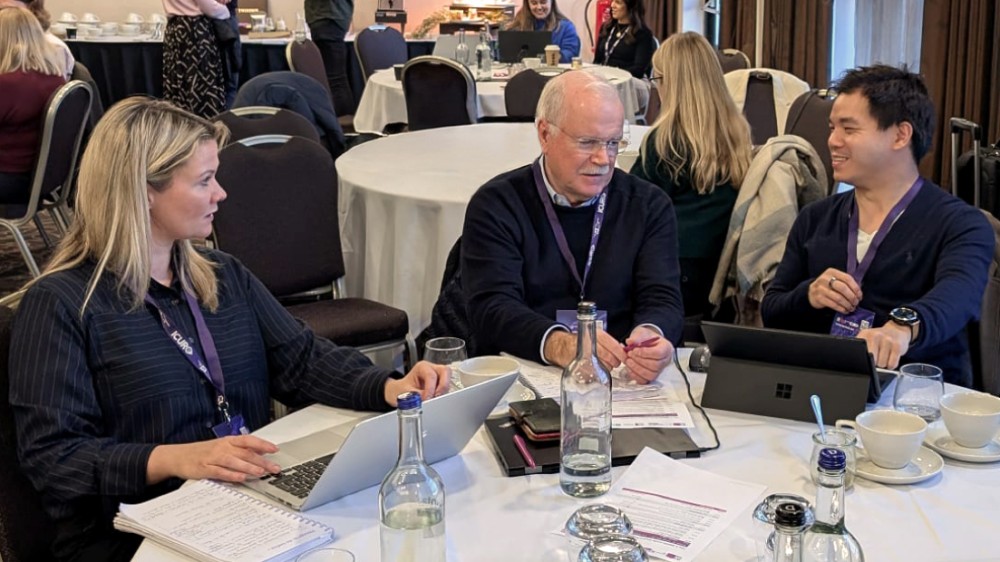
Three people at a table with papers and laptops in conversation

Eight teams have kick-started the commercialisation of their 3Rs tools and technologies through the BBSRC-NC3Rs ICURe Explore programme.

Technologies that replace, reduce or refine the use of animals have significant potential for commercialisation. Improvements in both the quality of science and animal welfare can be unique selling points, particularly given the increased drive from regulators and policy makers to implement 3Rs approaches. Importantly, commercialisation increases the opportunities for translating these new technologies into real-world applications that minimise animal use. 

Earlier this year we awarded £400k in partnership with the BBSRC to enable eight teams of NC3Rs, BBSRC and UKRI-funded researchers to participate in an ICURe Explore programme to commercialise technologies with 3Rs potential. The programme is run by Innovate UK and supports researchers to develop and explore the market potential of their technology through training, networking opportunities and dedicated mentoring from business experts. The teams have now successfully completed the programme, and are continuing with the commercialisation of their technologies, with four already taking part in the next stage of the programme, called ICURe Exploit, which focuses on spinning-out.

"The success of the researchers who took part in our joint BBSRC-NC3Rs ICURe Explore programme highlights the commercial potential of 3Rs technologies. All teams have made significant and positive steps towards commercialisation, reflecting both the strength of innovation in this space and the quality of the funded research.”
 

– Dr Noriane Simon, Head of Enterprise and Ventures, BBSRC.

“This cohort shows what is possible when high quality 3Rs science is paired with specific support for commercialisation. The success of these projects also reflects the continued strength of our partnership with the BBSRC in creating opportunities for transformative 3Rs tools and technologies. By working together, we can bring impactful innovations that benefit scientists, industry and animal welfare into real-world use faster.”

– Dr Anthony Holmes, Director of Science and Technology, NC3Rs.

BrainMix: Simple culture for advanced brain tissue models

Entrepreneurial lead: Chris Adams, Keele University 

BrainMix is an off-the-shelf frozen cell kit to generate multicellular brain models in vitro, without the need for specialist resources. The kits can be used for a broad range of neuroscience applications, with the potential to replace some animal studies. The BrainMix team are now receiving further training and advice from commercialisation experts through ICURe Exploit. To prepare for investment pitches and spin-out, the team are compiling external characterisation data, optimising protocols and gathering further data on commercial potential. Academic and industry partners, identified during ICURe Explore, will be beta-testing BrainMix over the next year.

MimicWell: Flexible in vitro compound screening

Entrepreneurial lead: Liam Carr, University of Edinburgh

Building on NC3Rs-funded work to replace some drug development studies in rodents, MimicWell is a body-on-chip device with perfused cell culture compartments to model five different organs and mimic circulation, enabling for example, in vitro toxicology and drug distribution studies. The team are now taking part in ICURe Exploit and are currently finalising work on scaling-up production of the device. They are keen to hear from potential collaborators interested in conducting proof-of-concept studies with MimicWell.

Learn more about MimicWell

MyoLoop: Replicating the heart, revolutionising discovery

Entrepreneurial lead: Barrett Downing, Imperial College London 

Based on NC3Rs-funded research to study cardiac injury in vitro, MyoLoop is a benchtop bioreactor that models physiological mechanical loading of cardiac tissue over time to recapitulate function in normal and diseased tissue. The bioreactor supports the use of living myocardial slice models to replace in vivo cardiac models in preclinical research and drug discovery, which often require injury or temporary blockage of the heart. The team are now building their business strategy in preparation for commercialisation. 

Metazoa: Animal physiology sensing simplified

Entrepreneurial lead: Liam Johnson, University of Manchester 

Metazoa provides miniaturised wireless devices for monitoring parameters such as heart rate and rhythm, breathing and locomotion in mice. The devices minimise animal suffering by avoiding the surgery often required for such monitoring by applying on-skin biosensors that use advanced materials science and flexible electronics to simplify the collection and analysis of this data. Similar technology has already been used in humans and the team are now collaborating with researchers from industry and academia to inform further development of the device for rodent studies.

Qore Biotechnologies: Redefining preclinical research with human heart tissue

Entrepreneurial lead: Laura Nicastro, Imperial College London and University of Cambridge

Qore Biotechnologies provides an organotypic in vitro platform to investigate human cardiac function. The ultra-thin, precision-cut sections of adult donor human heart tissue preserve the physiological characteristics of the heart and can be used in drug discovery to replace some animal studies, with slices from a single human heart replacing the use of up to 2,500 rodents. The technology stemmed from previous NC3Rs-funded research to develop myocardial slices to study cardiovascular disease. Qore Biotechnologies are now exploring collaborations with start-ups and pharmaceutical companies that they connected with through the ICURe Explore programme. They have secured additional funding to enable further experimental work in preparation for offering their services as a contract research organisation.

SPARKS: Vital signs – reimagined

Entrepreneurial lead: Miquel Serna Pascual, King’s College London 

Originally conceptualised during an NC3Rs Maths in Medicine study group, SPARKS uses a patented algorithm to convert diagnostic data (e.g. from an ECG or respiratory airflow trace) into enhanced visual representations that make it easier to detect and interpret subtle variations in heart rate and breathing. SPARKS increases data quality and reduces the number of animals required. The SPARKS team progressed to ICURe Exploit and as a result, a number of pharmaceutical companies and contract research organisations will be undertaking pilot studies to confirm the added value of SPARKS in preclinical drug development to optimise decision-making.

The FAIM project: Rapid antigen-specific T-cell receptor isolation for immunotherapies and diagnostics

Entrepreneurial lead: Sky Tien Haeng Ng, University of Birmingham

The FAIM platform enables rapid in-species development of therapeutic peptides for autoimmune disease using patient blood samples. Researching therapies for autoimmune conditions has traditionally relied heavily on animal models, typically mice, but the findings have not always translated into effective therapies for humans. FAIM replaces the use of mice and has the potential to support the development of more effective immune-modulating therapies. With the support of the ICURe Explore and Exploit programmes, the FAIM team are establishing a new company to support more rapid development of the technology.

HeteroGenesys: Decoding tumour complexity to design better treatments

Entrepreneurial lead: Kelsey Wosnitzka, University of Sheffield

HeteroGenesys has developed an advanced tumour modelling platform built on a living biobank of more than 100 patient-derived glioma models, created with funding from an NC3Rs PhD studentship. These cell-based models capture the heterogeneity and spatial complexity of solid tumours, providing a more accurate representation of human disease than traditional animal models. By integrating multi-omic characterisation with clinical data, the platform enables more predictive preclinical testing for hard-to-treat cancers while reducing reliance on animals. Following positive feedback throughout the ICURe Explore market exploration process, the HeteroGenesys team is now seeking funding opportunities and partnerships to further characterise their models in a non-academic setting and develop regulatory-compliant processes for wider adoption.