
NC3Rs: National Centre for the Replacement Refinement & Reduction of Animals in Research
News

Pioneering human-relevant approaches across immunotherapy, oncology and gene therapy
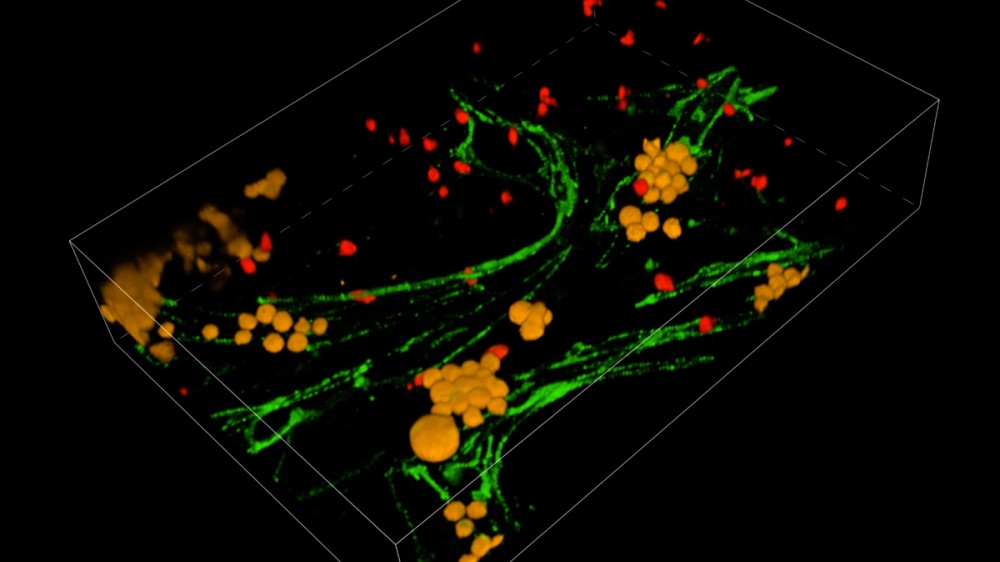
The 3Rs Prize winning leukaemia-on-chip device contains six different cell types and recreates the human bone marrow niche.

This year’s International 3Rs Prize recognises advances in complex in vitro models that enable the replacement of animals and generate new insights into human disease.

Earlier this year, our 3Rs Prize Panel met to select the 2026 winner from an outstanding pool of applicants. The Prize recognises a primary research paper, published between September 2022 and September 2025, that contributes to the 3Rs. It is sponsored by GSK as part of its long-standing support of the Prize. With submissions spanning all three ‘Rs’ and representing researchers from the UK, Ireland, Europe and the USA, the breadth and quality of applications made the final decision especially challenging. Alongside the winner, the Panel have also recognised two highly commended publications. 

Read about the pioneering human-relevant replacement approaches recognised by this year’s International 3Rs Prize below. Over the coming weeks we will be sharing interviews with our winning and highly commended researchers, discussing the science behind their work, the challenges they have overcome and the impact they are making on replacing the use of animals. 

“Reviewing this year's entries was both inspiring and challenging for the Panel, reflecting the exceptional standard of research being undertaken to advance the 3Rs. The winning and highly commended papers highlight the value of innovation and interdisciplinary collaboration and it is encouraging to see such strong momentum across the field. I look forward to seeing how these advances are translated into wider scientific and 3Rs benefits. My sincere thanks go to GSK for their continued support of the Prize and their commitment to recognising outstanding achievements in 3Rs research.”

– Professor Dame Julia Buckingham Chair of the NC3Rs Board and 3Rs Prize Panel

“Our longstanding commitment to the NC3Rs International Prize aligns with our strategy and our own 3Rs ambitions, which are integral to discovering and developing transformational medicines and vaccines for patients. We are proud to support an award that showcases high-quality science and inspires future advances in replacing animals in research.”

– GSK, 3Rs Prize sponsor

Winner: Engineering a leukaemia-on-chip platform for more predictive CAR T-cell research

Professor Weiqiang Chen whose work was performed at New York University, USA, has won the 2026 International 3Rs Prize for a publication reporting a human-relevant alternative to animal models for evaluating Chimeric Antigen Receptor (CAR) T-cell therapies. CAR T-cell therapy, a form of immunotherapy, has transformed the treatment of some blood cancers but patient responses remain variable, with mechanisms such as T-cell dysfunction and surface antigen loss contributing to treatment failure. Preclinical research supporting advances in target design and efficacy has largely relied on mouse models as the complexity of the immune system has been difficult to model in vitro. However, mouse models have limited capacity to predict human responses to CAR T-cell therapies. Immunodeficient mice lack a functional immune system, while humanised and genetically engineered models only partially reproduce the complexity of human immune cell interactions and signalling pathways.

Chen's team developed an ex vivo model that recreates the human leukaemia niche with a novel microfluidic chip device with three interconnected regions that integrate bone marrow, stromal and immune cells from donors. The chip design uses fibrin hydrogels to mimic the native bone marrow architecture, with various human cell types grown together to enable the screening of CAR T-cell therapies in a setting that closely reflects human immune-tumour interactions. To demonstrate the platform's translational relevance the team used data from 209 patients with leukaemia and showed that the leukaemia-on-chip device could reproduce clinically observed patterns of remission, resistance and relapse following CAR T-cell therapy. The platform also has potential applications across a range of haematological disorders, extending its potential to replace animal models beyond preclinical leukaemia and CAR T-cell research.

Chen will use the 3Rs Prize grant to standardise the leukaemia-on-chip model for high-throughput CAR T-cell screening and in partnership with clinical and industry collaborators, develop a protocol to evaluate patient responses to CAR T-cell therapy. Comparative studies against patient outcomes in the clinic will establish the model's predictive value, supporting its use as a replacement for animal models in CAR T-cell research.

"This Prize is not just a personal milestone; it is a profound honour to stand alongside a community that is driving real impact on the replacement, reduction, and refinement of animal use in research."

– Professor Weiqiang Chen

Highly commended: Replacing animal studies in retinal degeneration gene therapy research

Dr Kevin Achberger from the University of Tübingen, Germany, was highly commended for his publication on developing a human-relevant model that minimises reliance on animals in the development and testing of therapies targeting vision loss in Batten disease (CLN2), a rare childhood neurodegenerative disorder.

Genetically-altered mouse and naturally occurring dog models of Batten disease fail to accurately reproduce the retinal degeneration experienced by patients, limiting their value for testing potential treatments. To address this, Kevin’s team combined patient-derived retinal organoids with organ-on-chip technology, allowing them to mimic the retinal-epithelial interface of the human eye. The team used the platform to evaluate an experimental gene therapy for CLN2, demonstrating substantial improvements of disease-related features. The efficacy data generated using this human-based system directly supported approval of a first-in-human clinical trial for the gene therapy. This work demonstrates the potential of advanced, human-relevant methods not only to accelerate therapeutic development, but also to inform regulatory decision-making.

"I am very honoured to receive this Prize on behalf of the many colleagues who have worked with me on this project over several years. It is a wonderful recognition of the work we are trying to do in my lab: creating new in vitro models that help bring new therapies to patients while reducing our reliance on animal experiments."

– Dr Kevin Achberger

Highly commended: Moving beyond mice in medulloblastoma research

Professor Esther Becker and her team from the University of Oxford, England, were highly commended for a paper describing the development of a human cerebellar organoid model that could reduce reliance on animal models for studying medulloblastoma, the most common malignant brain tumour in children. 

Current research depends heavily on mice, but important species differences in cerebellar development can limit the ability of these animal models to accurately reflect how the disease arises and progresses in humans. For example, signalling mechanisms that drive cell growth and development appear to occur at different stages in the brains of humans and mice. Using human induced pluripotent stem cells Esther and colleagues generated organoids that reproduce key features of early human cerebellar development. The team introduced mutations in a gene commonly altered in a major subtype of medulloblastoma, using CRISPR gene editing. The resulting organoids showed several hallmarks of early tumour development, including increased cell growth, genomic instability and activation of cancer-related pathways. Importantly, their molecular profiles closely matched those seen in patient tumours, demonstrating the model's relevance to human disease and laying the foundation for its application in studying disease mechanisms and therapeutic development.

"I'm deeply honoured that our paper has been recognised with a highly commended 3Rs Prize. This recognition reflects the excellent efforts of our entire team, their talent, perseverance, and shared commitment to advancing science while championing the principles of the 3Rs. I'm delighted that our work has been recognised in this way.”

– Professor Esther Becker

About the 3Rs Prize

The 3Rs Prize recognises outstanding and original research that has demonstrated significant 3Rs impacts. The annual award consists of a £2k personal award and a £28k Prize grant. A £20k contribution is provided by GSK towards the Prize grant with all remaining funds provided by the NC3Rs. The Prize grant is intended to maximise the 3Rs impact of the published research. This may include further method development, characterisation and qualification studies, or activities that support training, dissemination, awareness and uptake of the 3Rs approach.

Where a publication is highly commended by the Panel, a £4k Prize grant and £1k personal award may be made solely by the NC3Rs.

Applications are assessed by the 3Rs Prize selection Panel against the following criteria:

  • Actual or potential impact on the 3Rs.
  • Dissemination of the scientific and 3Rs impacts to date.
  • Strength of plans for the Prize grant.
  • Potential impacts for the research, the 3Rs and development of the individual.