
NC3Rs: National Centre for the Replacement Refinement & Reduction of Animals in Research
Strategic grant

Co-developing dynamic human skin models for industrial validation and 3Rs impact
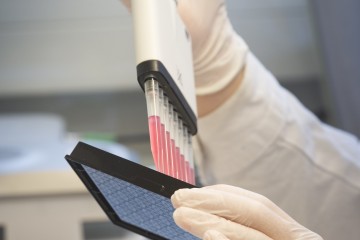
Gloved hands pipetting liquid into a 96 well plate

At a glance

Pending start
Award date
March 2026 - September 2026
Grant amount
£24,672
Principal investigator
Professor Dame Molly Stevens
Institute
University of Oxford

R

  • Replacement

Overview

Molly will work with LabSkin Ltd to enhance the physiological relevance of in vitro skin models for efficacy and safety testing, an area where animal studies such as the minipig wound healing assay remain in use. Her team will integrate a microfluidic culture platform developed at the University of Oxford with LabSkin Ltd’s commercially available human skin model and will assess how biomechanical stimulation affects skin architecture, maturity and barrier function. The study will generate preliminary data to assess the performance characteristics and predictivity of the integrated system.

Application abstract

This project between the Stevens Group, at the University of Oxford (UO), and industry partner LabSkin Ltd aims to co-develop next generation human skin models that more accurately replicate native physiology and function. The partnership combines complementary expertise: the Stevens Group’s research in bioengineering cell–material interfaces leveraging microfabrication and microfluidic strategies to direct cellular organisation and behaviour, with LabSkin’s leadership in providing reproducible, microbiome-competent human skin equivalents to the pharmaceutical, personal care, and cosmetics industries.  

Building on recent advances in organ-on-chip technology, the Stevens Group has developed a microfluidic culture platform designed to deliver, for the first time, combined biophysical and biomechanical cues to engineered tissues. Our platform addresses key limitations of existing systems by capturing two essential aspects of native biology: (1) microstructural organisation and (2) dynamic mechanical behaviour. The system enables dynamic perfusion and tuneable mechanical stimulation, in support of long-term tissue maintenance and enhanced tissue organisation. We focus on designing systems that enable the creation of highly biomimetic and physiologically relevant tissue models, advancing the refinement of existing in vitro systems and ultimately supporting the replacement of entrenched animal models.  

Through this project, we will apply our platform to skin applications in collaboration with LabSkin, curating an industry focused biological validation dataset. Together, we will assess how controlled biomechanical stimulation influences tissue architecture, barrier function, time to tissue maturity, and longevity in culture. These studies will provide key proof-of-concept data on the performance and translational potential of the microfluidic system developed at UO.  

By integrating LabSkin’s industry-standard skin constructs with Oxford’s microengineering innovations, this collaboration will generate a new class of physiologically relevant in vitro skin models. The anticipated outcomes include improved model fidelity, extended usability, and enhanced predictive power for safety and efficacy testing, ultimately supporting the replacement of animal use across multiple sectors.