
NC3Rs: National Centre for the Replacement Refinement & Reduction of Animals in Research
Strategic grant

Developing human neutrophil-T-cell co-culture assays to refine off-target immunotoxicity testing of T-cell receptor-based therapeutics
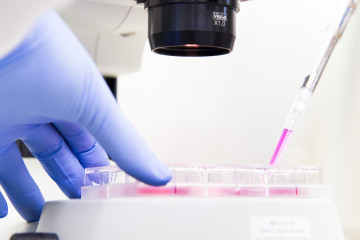
A cell culture plate containing pink liquid under a microscope. A gloved hand is holding the plate while another is pipetting liquid into it.

At a glance

Pending start
Award date
March 2026 - September 2026
Grant amount
£25,000
Principal investigator
Professor Felicity Gavins
Institute
Brunel University of London

R

  • Replacement

Overview

Felicity will work with King’s College London (KCL) and industry partner Immunocore to advance human cell-based assays for the preclinical safety assessment of T-cell receptor (TCR)-based therapeutics. Current immunotoxicity tests rely heavily on animal models which offer limited insight into human immune responses due to differences between species. The team will combine Immunocore’s T-cell and neutrophil assays into a co-culture system to better capture complex immune cell interactions and predict unwanted immune activation in response to TCR-based therapeutics. High-precision single cell analysis will be used to generate novel multidimensional datasets, which will be analysed using artificial intelligence to identify high-dimensional signatures of immune activation and potential off-target effects. These data will help evaluate how the co-culture model could support preclinical safety studies and improve the identification of immunotoxicity risks.  

Application abstract

This collaboration between Brunel University of London (Brunel), King’s College London (KCL), and the biotechnology company Immunocore will establish an advanced, human-relevant platform for pre-clinical immunomodulation and safety assessment of T-cell receptor (TCR)-based therapeutics.  

Immunocore’s innovative technology harnesses the natural ability of T-cells – a type of white blood cell that detects and destroys abnormal or infected cells - to target diseases that normally evade immune surveillance. By engineering soluble bispecific TCR×CD3 molecules, Immunocore’s therapies can precisely redirect T-cell activity towards diseased tissues. However, because these molecules are highly specific to human immune receptors, their safety and immune-modulating effects cannot be reliably assessed using conventional pre-clinical animal models, which differ markedly in immune receptor biology.  

To address this limitation, the project will deploy innovative co-culture systems of human adaptive and innate immune cells to study and predict potential unwanted immune drug reactions, without relying on animal testing. By combining Immunocore’s established T-cell and neutrophil assays with the novel Brunel-KCL high-content phenotypic and functional imaging platform - which provides detailed quantitative data on immune cells responses at single cell resolution - the team will test whether these enhanced next-generation New Approach Methodologies (NAMs) can improve detection of undesired immunomodulatory effects in pre-clinical settings and better support regulatory decision-making.  

This project strengthens ongoing NC3Rs initiatives promoting the urgent adoption of human-relevant immune models and will deliver a validated, data-rich assay pipeline to advance predictive immunotoxicology. The project outcomes will help make the development of next-generation TCR-based biotherapeutics safer, while also reducing reliance on animal testing for immune safety across multiple therapeutic and chemical sectors.