
NC3Rs: National Centre for the Replacement Refinement & Reduction of Animals in Research
Strategic grant

Development of a vascularised glioblastoma tumour-on-chip for predictive, non-invasive chemotherapeutic evaluation
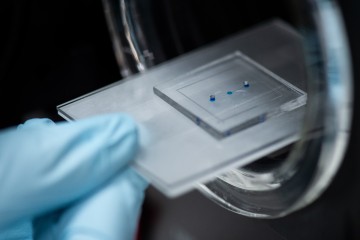
An organ-on-a-chip device being placed into the chamber of a machine

At a glance

In progress
Award date
March 2026 - September 2026
Grant amount
£25,000
Principal investigator
Professor Gareth Cave
Institute
Nottingham Trent University

R

  • Replacement

Overview

Gareth will use his award to establish a vascularised glioblastoma tumour-on-a-chip model using human cells to replace the use of mice in early cancer treatment studies. His team will combine their existing 3D scaffold technology, which supports the formation of a functional blood-brain barrier, with Kirkstall Ltd’s Quasi Vivo® microfluidic system. The integrated setup will be tested with chemotherapeutic agents to assess barrier integrity, tumour cell responses and drug permeability across the blood-brain barrier. The team will also develop standard operating procedures for scaffold integration, cell seeding, media formulation and perfusion to support wider adoption of the model. 

Application abstract

This project aims to develop a vascularised Glioblastoma tumour-on-chip model for predictive, non-invasive chemotherapeutic evaluation, addressing the urgent need for physiologically relevant, human-based  platforms in brain cancer research. By integrating our patented 3D scaffold technology (WO2025191281) with Kirkstall Ltd’s established Quasi Vivo® microfluidic system, we will optimise their organ-on-chip platform to support a blood-brain barrier (BBB) and glioblastoma co-culture, enabling high-throughput drug screening without reliance on animal models. The methodology involves embedding a vascular scaffold within Kirkstall’s perfusion chambers to support BBB formation and tumour growth using pre-characterised glioblastoma cell lines. We will co-develop standard operating procedures (SOPs) for scaffold integration, cell seeding, media formulation and perfusion protocols to ensure reproducibility and scalability. The platform will be validated using known chemotherapeutic agents to assess barrier integrity, tumour response and drug permeability, with readouts including viability, molecular markers and imaging (optical, ultrasound, CT and MRI). This collaboration will expand Kirkstall’s portfolio beyond organ maintenance into disease modelling, offering pre-prepared cell lines and media kits for glioblastoma research. The project directly supports the NC3Rs mission by replacing animal models with a human-relevant, scalable alternative for brain cancer drug testing. It also aligns with BBSRC’s remit by enhancing the biological relevance and predictive validity of in vitro systems. Expected outcomes include a validated glioblastoma-on-chip prototype, SOPs for commercial deployment, and a foundation for future collaborative funding. The model will be disseminated through joint publications, workshops, and engagement with pharmaceutical partners, accelerating adoption across academia and industry.