
NC3Rs: National Centre for the Replacement Refinement & Reduction of Animals in Research
Strategic grant

Novel bioprinting technologies for engineering of compressible zonally stratified cartilage tissue for study of therapeutic interventions
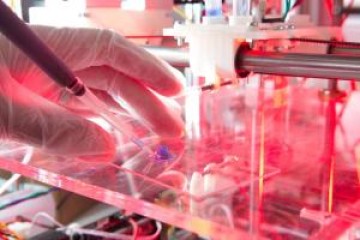
A laboratory technician working with a syringe

At a glance

Pending start
Award date
March 2026 - September 2026
Grant amount
£24,813
Principal investigator
Dr Katarzyna Pirog
Institute
Newcastle University

R

  • Replacement

Overview

Katarzyna will work with researchers from across Newcastle and Northumbria Universities and in close collaboration with industry partner Copner Biotech. Combining expertise in biosciences, engineering, and advanced materials the team will use advanced bioprinting technologies to generate cartilage-like structures for investigating the biological mechanisms involved in cartilage development, ageing and disease. Using Copner Biotech’s next generation 3D modelling software and bioprinting platform, the team will combine a variety of bioinks to produce constructs with defined microarchitectures. The developed in vitro models will be compared against existing data from human samples and animal studies to assess the physiological relevance and suitability for safety testing of senolytic (i.e. those that selectively induce the death of senescent cells) drugs used to treat osteoarthritis.

Application abstract

Hyaline cartilage is a complex zonally stratified avascular tissue with low regeneration potential, and low human tissue availability. Therefore, studies of cartilage development and ageing (as well as disease) are currently performed in animal models. One of the main hurdles of creating an accurate research model of cartilage is recreating its complex morphological structure. Recent advances in bioprinting, allowing precise fine tuning of bioink properties such as stiffness, permeability and growth factor and peptide modifications, make the creation of such model possible. In this application, we are proposing to partner with Copner Biotech, who have been awarded the MediWales Innovation Start-Up Award in 2022 and the MediWales Innovation Award in 2023 for their innovative approach to 3D printing of tissues. Copner Biotech’s novel approach to bioprinting couples microfluidic droplet deposition with raster-style, sequential printer head movement, unlocking a new level of precision during the bioprinting process. Their next generation 3D modelling software allows the users to create complex microarchitectures directly applicable to tissue engineering, with a variety of bioinks allowing tuneable microarchitecture print layers. This technology, coupled with our expertise in customisable bioinks, bioreactors, and cartilage biology will create the perfect partnership needed to build a printable model of developing and aged hyaline cartilage for research purposes. We will use our combined expertise to create a mechanically relevant zonally stratified model of young and old cartilage tissue and validate the model against previously gathered data from human samples and animal models. We believe that our novel tissue engineered approach will unlock new potential for cartilage and ageing research as well as more clinical approaches (diagnostics, drug toxicity screening, efficacy and preclinical testing, personalised medicine) and will ultimately lead to the replacement of animal models in skeletal research.