Welfare webinar: Fish skin swabbing for refined DNA sampling
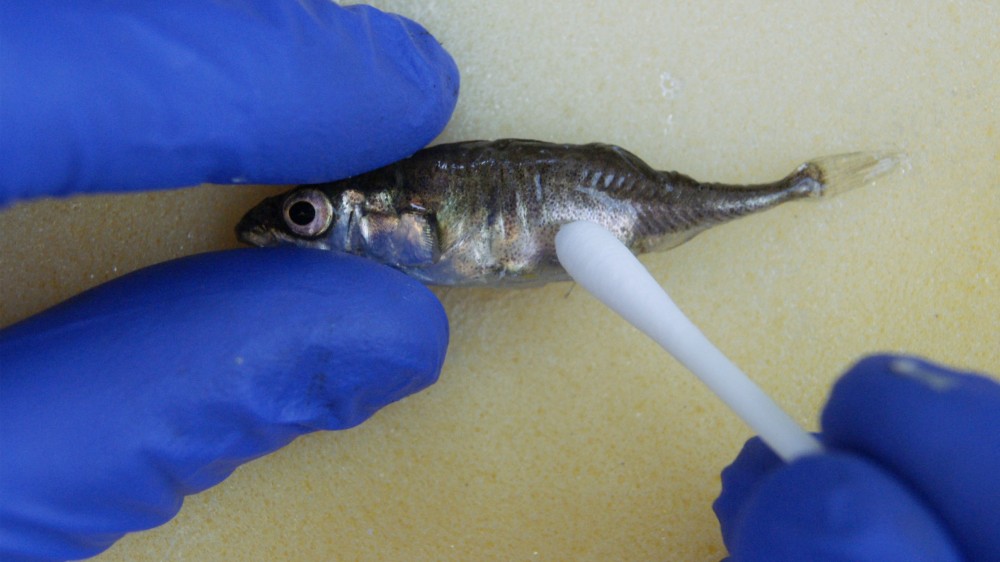
Skin swabbing is a method of obtaining DNA for genotyping by collecting mucus from the flank of a fish. It is less invasive than removing fin tissue and does not require fish to be anaesthetised using aversive agents. Skin swabbing has been validated as a refined method for DNA sampling in zebrafish and stickleback using behavioural and physiological measures of fish welfare.
This webinar covered the evidence base and professional experience supporting the adoption of skin swabbing as an efficient and practical refinement for zebrafish genotyping.
Speakers and topics
- Skin swabbing as a refined method for DNA sampling for fish in research.
Will Norton, Associate Professor of Animal Biology within the genetics and genome biology department – The University of Leicester. - Skin swabbing as a non-invasive alternative to fin clipping for commercial automated genotyping.
Mollie Millington, Senior Research Scientist and Aquatics Facility Manager – The Francis Crick Institute.
Webinar recording
Further resources
- Learn more about skin swabbing as a welfare refinement and how to establish a protocol in your laboratory on our guidance page: Skin swabbing for DNA sampling of zebrafish.
- Will Norton's NC3Rs-funded research project confirmed the welfare benefits of skin swabbing for fish, validating its use as a refined technique: Quantifying the potential of skin swabbing as a refinement for DNA sampling of laboratory fish.
This session forms part of the NC3Rs welfare webinar series which is focused on practical, evidence-based refinements for laboratory animals. Explore other recordings and upcoming sessions: NC3Rs welfare webinars.
Guidance on the refined technique and establishing a protocol in your laboratory.
Practical welfare refinements to support positive change in day-to-day practice.