
The DRIVER recommendations: Improving the quality of in vitro research
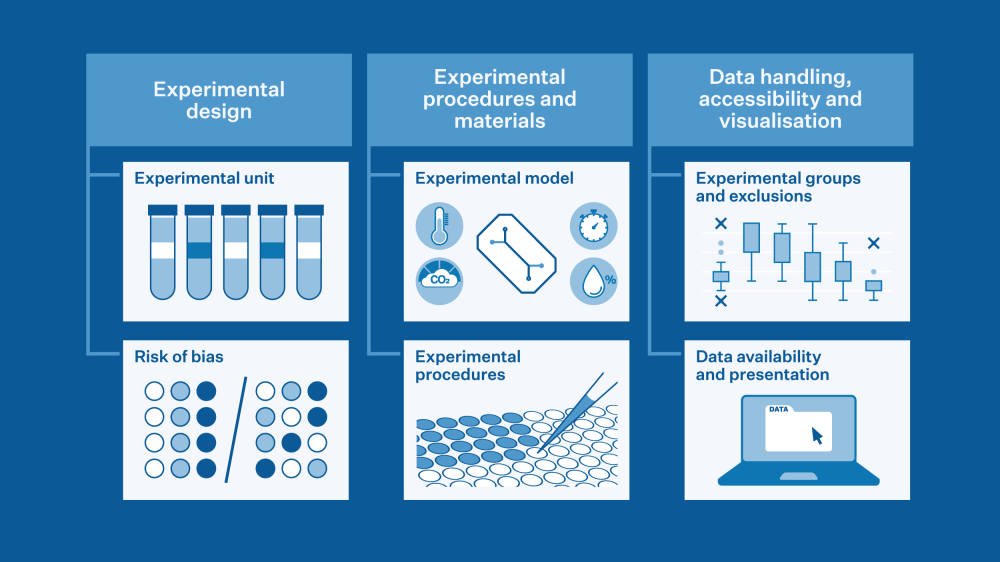
New NC3Rs recommendations set international standards for designing and reporting in vitro research.
The NC3Rs has launched the DRIVER recommendations, a new framework designed to improve the quality, reliability and reproducibility of research using in vitro models.
In vitro models – 2D cell culture, organoids and organ-on-chip systems – are essential tools for studying biological processes and diseases. However, evidence suggests that findings using these models are not always reliable or reproducible because of the way in vitro experiments are conducted and then reported in the scientific literature. This can have a knock-on effect on researchers’ confidence in in vitro models and limit their potential to be used as alternatives to animals. It also means that the animals that are used to provide cells, tissues and reagents for in vitro experiments are “wasted” in studies that do not add to the knowledge base because of data and results that cannot be trusted.
The DRIVER recommendations set international standards to improve the quality of in vitro experiments. Developed by the NC3Rs in partnership with experts from around the world, the recommendations target researchers and journal editors. Focusing on the full experimental process from the design of the study through to data analysis and reporting, the DRIVER recommendations address common flaws in in vitro experiments that affect the reliability and reproducibility of the findings obtained from them. To support researchers to use the DRIVER recommendations we have also launched a complementary online resource that includes practical tips, interactive content and worked examples to illustrate key concepts that underpin best practice.
The DRIVER recommendations will benefit the entire research ecosystem, providing funders, journals and universities with a practical framework to improve the design, conduct and reporting of in vitro studies. By establishing a shared standard, they will also support the upskilling of early-career researchers and peer reviewers, helping to strengthen the quality and reliability of in vitro research.
Dr Nathalie Percie du Sert, Director of Research Practice at the NC3Rs.
Providing robust and reliable in vitro models that can replace animals in research and testing is key to delivery of the UK Government’s strategy on alternatives to animal use. The DRIVER recommendations help to support this. The strategy also includes a commitment to engage journal editors and publishers in incentivising and facilitating the publication of alternative methods as routine practice across the life sciences sector – the DRIVER recommendations will form the basis for delivering this commitment.
Visit the DRIVER recommendations online resource.
Read more about the DRIVER recommendations and their development.