
Working with Innovate UK to deliver the Government’s alternative methods strategy

£2M available to accelerate the adoption of non-animal approaches for pharmacokinetic prediction and cardiovascular safety.
We are working in partnership with Innovate UK (IUK) to support organisations developing innovative replacement technologies in two priority areas identified by the UK Government. Pharmacokinetic and cardiovascular safety studies typically involve dogs and non-human primates and there is significant potential for in vitro and in silico approaches to replace animals and improve prediction of drug efficacy and safety in these areas.
In their 2025 alternative methods strategy, the UK Government set targets to replace at least 35% of dog and non-human primate use for pharmacokinetic prediction, and 50% in cardiovascular safety studies, by 2030. To support this ambition, we are bringing our expertise in 3Rs-focused innovation to IUK’s ‘Industrial human-relevant drug models’ programme. The Contracts for Innovation competition is focused on delivering non-animal approaches suitable for use by the pharmaceutical industry to improve pharmacokinetic and cardiac safety studies and replace some dog and non-human primate use in drug development.
Further information about the competition and application process is available on the Innovation Funding Service.
Learn more at the online competition briefing and get involved in scientific discussion and meet potential project partners at our in-person workshop.
- Register for the online competition briefing: Wednesday 4 March, 14.00 – 16.00 (GMT).
- Register for the in-person workshop: Tuesday 10 March,
10.00 – 17.00, Central London.
Continue reading for the scientific background and key dates below.
Scientific background
Pharmacokinetic studies
Government target: Use validated alternative methods to reduce the use of dogs and non-human primates in dedicated pharmacokinetic (PK) studies for human medicines by at least 35% by 2030.
Currently, no alternative methods exist that can fully predict in vivo pharmacokinetics. Opportunities to accelerate reduction and replacement of animals in this area include:
- Improving access to broader PK datasets across different compound classes to enhance computational and AI models, particularly when combined with human-based in vitro tools such as tissue cultures, organoids or organ‑on‑a‑chip systems. These methods require further development, including for long-term exposure studies in vitro.
- Eliminating dedicated animal PK studies where kinetic data can be generated as part of other study types, such as general toxicity studies.
Cardiovascular safety studies
Government target: Use validated alternative methods to reduce the use of non human primates and dogs in dedicated cardiovascular safety studies by at least 50% by 2030.
Standard in vitro assays such as the hERG ion channel assay are widely used prior to regulatory in vivo studies. Emerging frameworks like CiPA integrate in vitro assays, in silico modelling and human stem cell‑derived cardiomyocytes but are not yet fully validated. Opportunities to accelerate reduction and replacement of animals in this area include:
- Further qualification and validation of existing alternative approaches.
- Increasing the combinatorial power of in silico and in vitro approaches.
- Developing a standard framework for alternatives-based cardiac safety assessment in R&D pipelines.
- Developing novel alternative approaches to fill existing gaps in non-animal cardiac safety.
Key dates
| Competition stage | Date |
|---|---|
| Competition launch | Tuesday 3 March |
| IUK online competition briefing | Wednesday 4 March, 14.00 – 16.00 (GMT) |
| Discussion and networking event | Tuesday 10 March, 10.00 – 17.00, Register for the NC3Rs/IUK in-person workshop. Registration closes: Friday 27 February. |
| Application deadline | Wednesday 15 April |
Further information on the Contracts for Innovation competition, including eligibility, scope and how to apply.
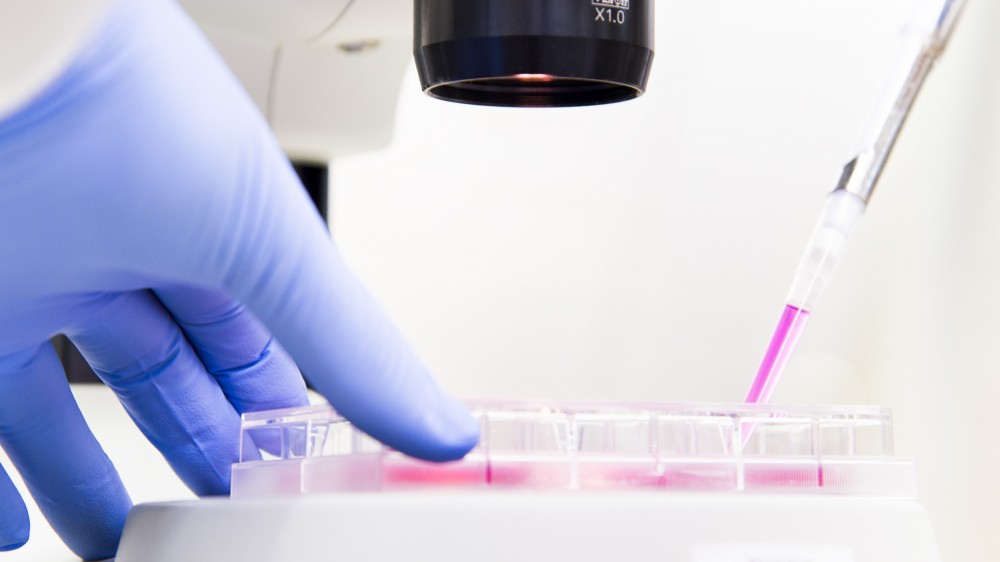
Grace Ford, Innovation Lead for Medicines at Innovate UK, explores alternative models, the shifts in the UK landscape and what innovators can expect from the industrial human relevant drug models competition.