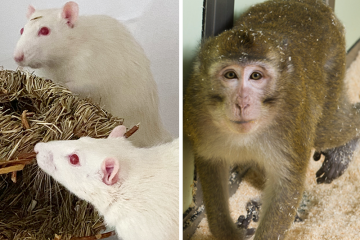
Commitment 15 of the UK Government's Replacing Animals in Science Strategy is to quantify and publish information from the Medicines and Healthcare products Regulatory Agency (MHRA) on the use of data from two species – a rodent (e.g. mouse or rat) and a non-rodent (e.g. dog, monkey or mini-pig) in clinical trial applications (CTAs). The NC3Rs Chief Executive was assigned as the Senior Responsible Owner for this commitment and we have been working with colleagues at the MHRA to collate and analyse the required data.
The first batch of data includes applications that were assessed by the MHRA between 16 June and 25 September 2026. It does not include data from 'notifiable' trials – that is applications that have no significant safety concerns and meet specific predefined conditions (such as a trial involving a higher dose having previously been approved in the UK, or for trials that have already been approved in the EU or USA). Initial analysis of the 186 CTAs provided during this period has established the first baseline dataset, with around two-thirds of applications including studies in both a rodent and non-rodent species (see the summary below). We are now collaborating with the MHRA to identify opportunities to enhance future reporting and analysis. Data will initially be provided and analysed quarterly until full annual metrics are available for publication.
Of the 186 CTAs assessed between 16 June and 25 September 2026:
128 (69%) included studies in both a rodent and non-rodent species.
49 (26%) included studies in a non-rodent species only.
6 (3%) included studies in a rodent species only.
3 (2%) did not include any toxicology studies in animals.
The majority of CTAs were for small molecules (88; 47%), followed by antibodies (56; 30%), with all other modality classes accounting for the remaining 23%. Most small molecule CTAs (83/88; 94%) included studies in both rodent and non-rodent species, whereas most antibody CTAs (40/56; 71%) relied on studies in a non-rodent species only, reflecting established approaches for biologics where a single relevant species can be used.
Table 1 shows species use by study type and duration. For small molecules, the majority of both sub-chronic and chronic studies included both rodent and non-rodent species (75/82, 91%, and 51/59, 86%, respectively). In contrast, for antibodies, only 11/50 (22%) of sub-chronic studies and 3/35 (9%) of chronic studies included both rodent and non-rodent species, with the majority conducted in a non-rodent species only. This is consistent with current international pharmaceutical guidelines for biologics, where a single relevant species may be sufficient and there is the option to drop the second species for later-development studies.
Table 1. Species use by molecule type and study duration in clinical trial applications (CTAs) assessed by the MHRA between 16 June and 25 September 2026.
Molecule type
ALL*
Single-dose
Both species
Single-dose
Rodent only
Single-dose
Non-rodent only
Single-dose
No species
Sub-chronic
Both species
Sub-chronic
Rodent only
Sub-chronic
Non-rodent only
Sub-chronic
No species
Chronic
Both species
Chronic
Rodent only
Chronic
Non-rodent only
Chronic
No species
Small molecule
88
27
7
3
51
75
4
3
6
51
5
3
29
Antibody
56
1
2
21
32
11
3
39
3
3
2
30
21
Peptide
11
5
1
0
5
11
0
0
0
5
2
3
1
Antibody-drug conjugate
9
4
1
2
2
8
0
1
0
0
0
1
8
Oligonucleotide
8
1
0
1
6
8
0
0
0
7
0
0
1
Vaccine
8
1
0
0
7
2
3
2
1
0
0
0
8
ATMP**
4
3
0
0
1
0
0
1
3
0
1
1
2
Enzyme
2
0
0
0
2
1
0
1
0
0
0
1
1
Totals
186
42
11
27
106
116
10
47
13
66
10
39
71
*Total number of applications by product type. **Advanced therapy medicinal product.