Welfare webinars
Our welfare webinars focus on evidence-based refinements for laboratory animals. The series is suitable for anyone who is directly involved in the use and care of research animals, including researchers, animal technicians and ethics committee members. These online sessions and recordings aim to support those who are in a position to implement practical welfare refinements and support positive change in day-to-day practice.
Upcoming sessions
Topic: Anaesthesia and analgesia for fish in research
- 22 October (12.30 – 13.30).
- Speakers: Lynne Sneddon (University of Gothenburg) and Sylvia Dimitriadou (University of Exeter).
- Register now: Anaesthesia and analgesia for fish in research.
Topic: Welfare refinements for laboratory Xenopus
- Save the date: 26 November (12.00 – 13.00).
- Speaker: Rue Jones-Green (University of Cambridge).
- Registration details will be announced shortly.
Topic: Voluntary oral dosing for refined drug administration
- Save the date: 15 December (12.00 – 13.00).
- Speakers: Emma Robinson and colleagues (University of Bristol).
- Registration details will be announced shortly.
Topic: Rodent micropipette-guided drug administration
- Save the date: 21 January 2027 (12.30 – 13.30).
- Speakers: To be announced.
- Registration details will be announced shortly.
Stay up to date with the latest welfare webinar registration opportunities and recordings by subscribing to our newsletter and social media channels: LinkedIn and Bluesky.
Webinar recordings and Q&As
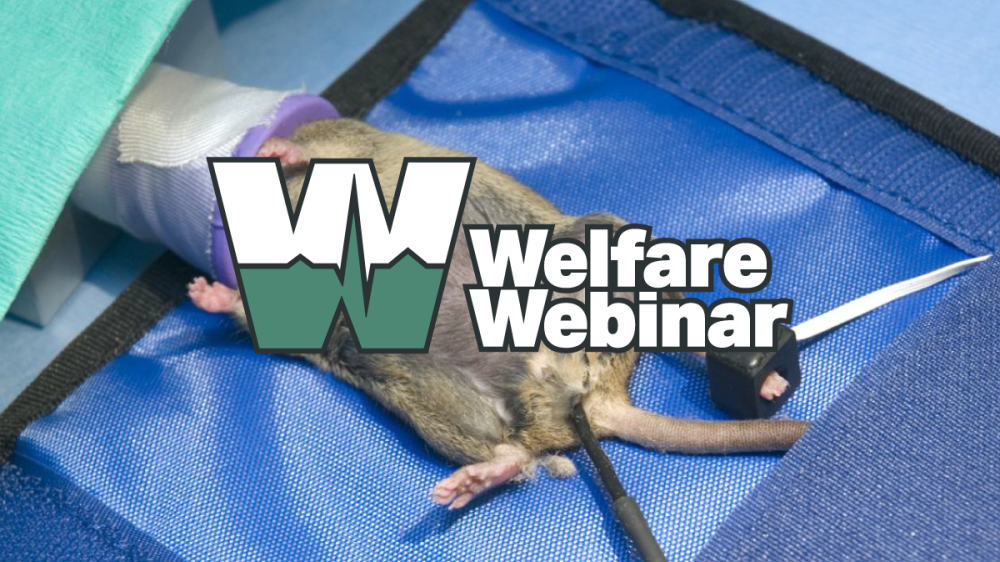
Veterinary anaesthetists from the Research Animal Anaesthesia Network (RAAN).
Cathrine Juel Bundgaard, Novo Nordisk.
Featuring a group of cross-sector speakers.
Robert Gerlai, University of Toronto.
Therése Ahlström, Research Institutes of Sweden (RISE).
Khia Dobbinson, NC3Rs and Zoe Windsor, University College London.